The Herbs and Recipes Series – Chickweed, Kefir and Lentils make a Yummy and Healthy Combination
Finding unique recipes to use the healthy and flavorful Herbs and plants harvested on our farm is one of my passions.
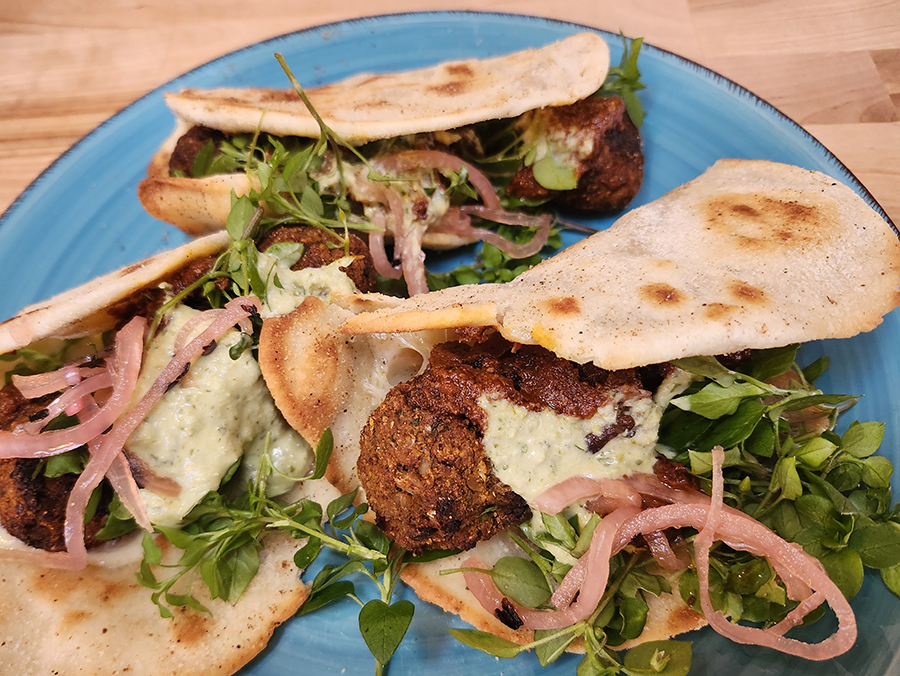
Lentil Meatballs tucked in Kefir/Sourdough Naan Bread garnished with Chickweed Greens, Matcha Sauce, Pickled Red Onions and Horseradish Verde Sauce.
Recipes below. First let’s learn about a very important wildcraft Herb that is rarely spoken about in Herb books or even in Foraging books despite all the wonderful qualities it possesses.

COMMON CHICKWEED
Chickweed is one of my favorite wildcrafted herbs! It has the sunny taste of sweet corn and is generously offered to us in the colder months when there are very few other garden greens available. Chickweed brings joy, nutrition and flavor to any salad, stir-fry, or sandwich. Not to mention all the Nutritional and Medicinal value it hosts.
Usually a wildcrafted herb, Common Chickweed is also easy to grow ‘on purpose’ in your garden.
What is Chickweed? Common Chickweed (Stellaria Media) is a low growing weed originating from Europe and is in the Pink Carnation family. It now grows all over the world, as it has followed explores to new lands.
It is also known as chickenwort, craches, winterweed, and maruns. It is so nutritious that is known to be an appetite suppressant for dieters.
IDENTIFY
When harvesting any wildcrafted plant you really need to spend a little time being able to recognize the plant before you make dinner with it. This requires understanding a little about plant parts. We could get way deep into it, but let’s keep it simple. ‘Notice’ a few things about the plant. Is the stem round, or square? Is it hairy or smooth? What is the shape of the leaf, is it round, oval, long or pointed? Do the leaves sit across from each other on the stem or are they opposite of each other? Do the leaves grow in clusters or is a single leaf coming off the stem? What do the flower and seeds look like, color, shape, etc?
IMPOSTERS
Common Chickweed has two poisonous look a likes (Spurge and Scarlet Pimpernel) and two edible sisters that while not poisonous, are not as tasty or textually palatable (Mouse -Eared Chickweed and Star Chickweed). So it is worth taking the time to get to know what Common Chickweed looks like compared to the other four.

RECOGNIZING COMMON CHICKWEED
The most distinctive feature of Common Chickweed is the fact that it grows a line of tiny hairs like a Mohak up the length of the stem (You may need a magnifying glass to see them). The most peculiar thing is this single line of tiny hairs grows on the opposite side of the stem after each node (where leaves are attached to the stem). No other plant really does that. So if you see this, you will know for sure you have the right plant. Common Chickweed has tiny white flowers with five deeply cleft petals (making it look like 10 petals).
Scarlet Pimpernel flowers are orange, red or blue and the leaves can have tiny red dots on the underside. Common Chickweed’s leaves are smooth and have no spots on the underside. Also Scarlet Pimpernel has a square stem, while Chickweed is round. Spurge has different shaped leaves and when broken Spurge will release a white milky sap that is irritating to the skin. Common Chickweed usually grows in great clumps, while Star and Mouse-Eared Chickweed usually grow as individual plants.
MEDICINAL AND NUTRITIONAL POWERHOUSE!
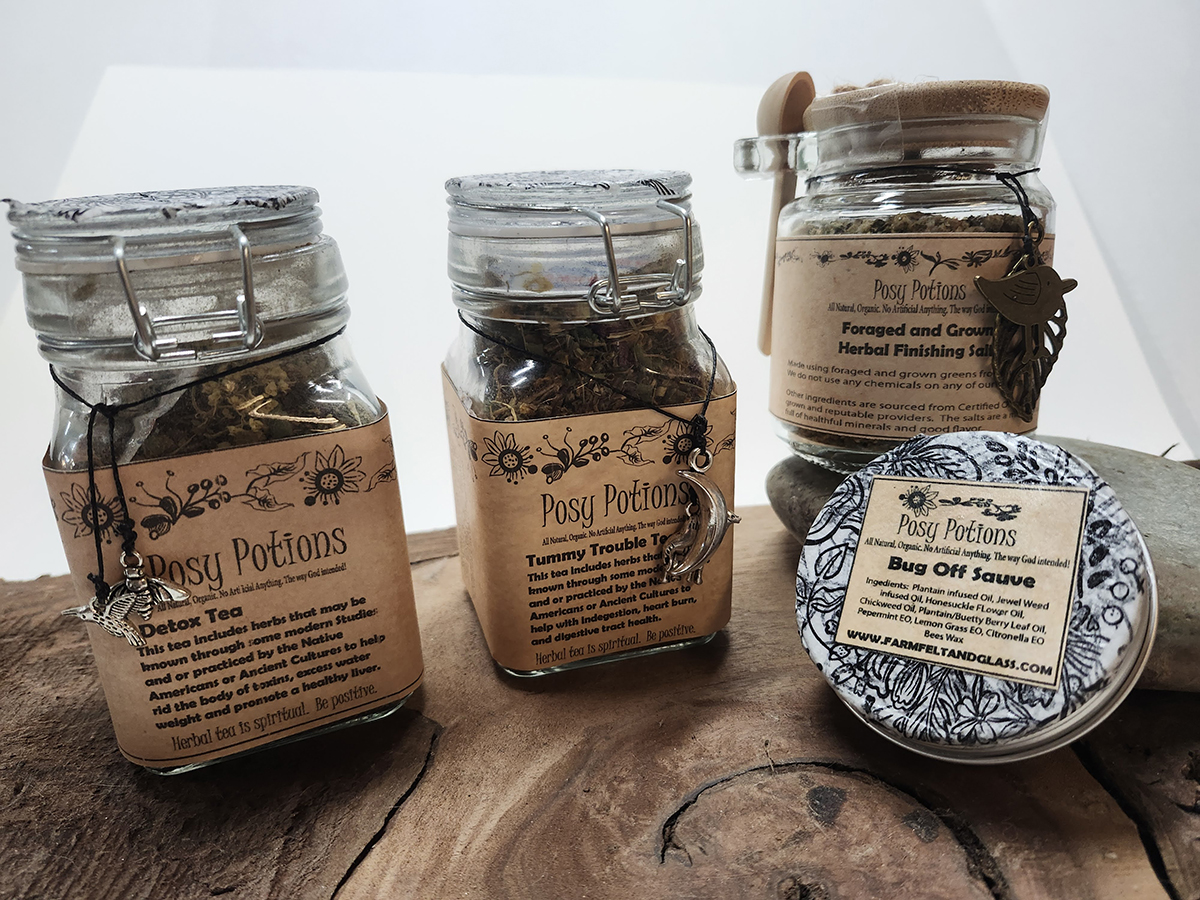
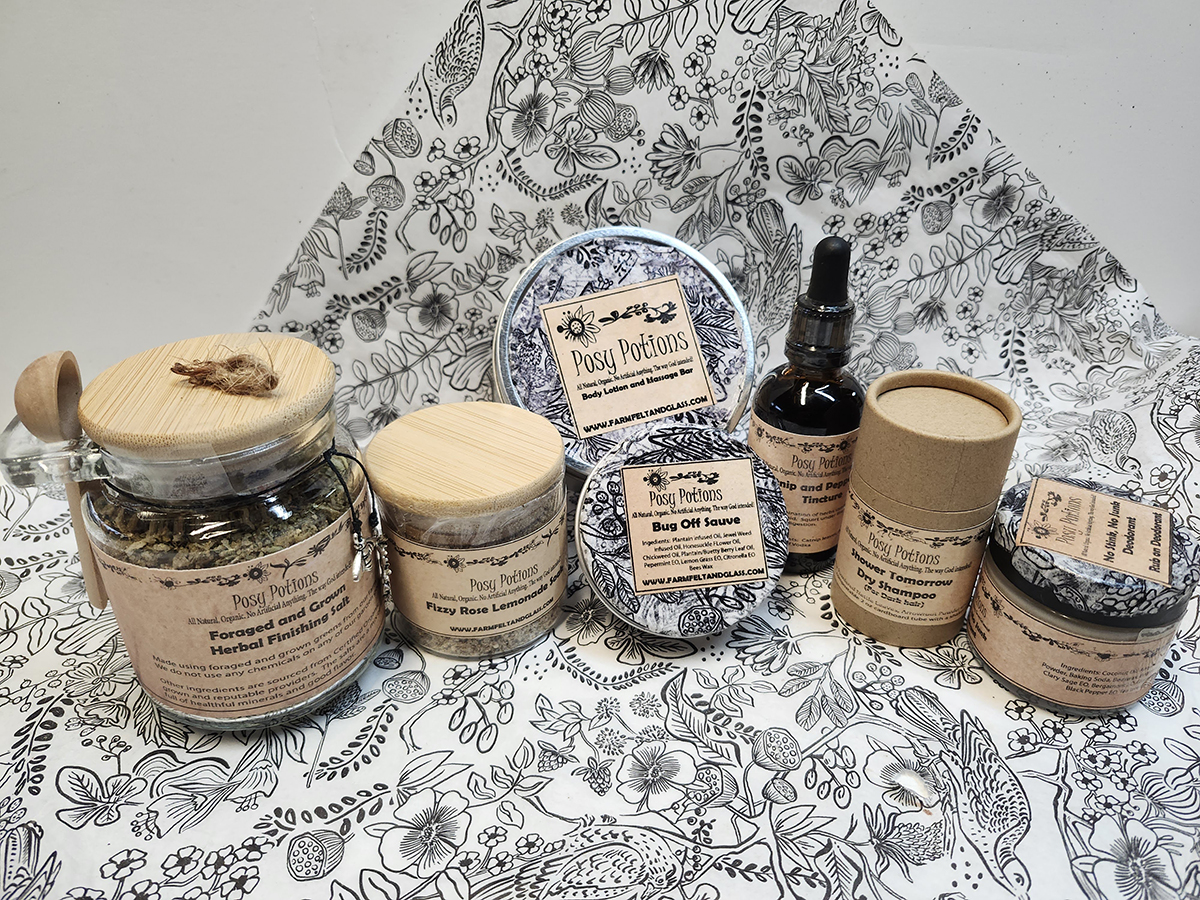
Common Chickweed is packed with not only vitamins but loads of minerals as well. Beta-Carotene, Calcium, Fiber, Iron, Magnesium, Niacin, Phosphorous as well as being high in Vit C and Zinc, wow, what a powerhouse!! Medicinally it is a demulcent (rich in mucilage and can soothe and protect irritable or inflamed internal tissue), Diuretic (helping to cleanse and detoxify), Expectorant (help the body deal with mucous, in Chickweed’s case it helps with a Dry Cough), Febrifuge (antipyretic, reducing or prevent fever), Inflammatory Modulator, Lymphagogue (promote lymphatic drainage, aiding in detoxifying and maintaining health of various body systems), Vulnerary (used to heal wounds and reduce inflammation either internally and/or externally). You can take in all Common Chickweed has to offer by using it as a fresh food (fresh greens, stir-fry or pesto), make a salve (I use chickweed infused oil in several of the salves I sell in our studio farm store), you can also use it in a Vinegar infusion, poultice, tincture or cream. I also use freeze dried Chickweed in some of my Teas (Posy Potion’s Detox Tea and Posy Potion’s Tummy Trouble Tea), as well as in a wonderful Finishing Salt (Posy Potion’s Foraged and Grown Finishing Salt) and our Bug Off Salve also sold in our studio farm store. Please see resources at the bottom of the page for additional information.
HARVEST
The best time to harvest Chickweed is anytime you can, as long as it has not gone to seed. Chickweed is a short lived annual that readily continues to reseed and replenish itself throughout the growing season, It prefers cool, moist and somewhat shady soil and can tolerate temperatures as low as 20 Fahrenheit. It usually begins to grow in Fall and is harvestable all Winter into Spring, dyeing back once the heat of Summer sets in.

Once temps reach about 40 degrees consistently it really takes off and you can find great clumps of it, making harvest easy. Use scissors to harvest, ‘giving it a haircut’, aiming for the top shoots. Flower and buds are also good to eat. Once it goes to seed, the stems and leaves can get stringy and tough, so harvest the younger more delicate shoots on the top (top 2 inches of the plant) for the tastiest of bits. Store and clean like any other salad green.
RECIPES
My favorite way to use Chickweed is as a fresh green. This is how you will get the most out of this nutritional powerhouse. It is a fabulous addition to other greens in a salad and is a great substitute for lettuce or even sprouts on sandwiches and in this case on our homemade Naan bread.
Sourdough, Kefir Naan Flat Bread
The dough is quick to make, but takes 8 to 12 hours to rise. It requires rolling each bread out and pan frying. This, I will admit, is a labor of love. I make triple batches at one time and freeze them to have months later. Just whip them out of the freezer and warm in the oven for a quick meal with homemade ‘good ‘for your gut’ bread. The slightly sour, bright taste and soft inside with crispy bits on the outside make for a super delicious sandwich alternative. Both Sourdough and

Kefir are fermented and very good for you gut! We will discuss Kefir another day, but it is amazing stuff that is worth learning about, especially if you have gut issues.
INGREDIENTS
1/4 cup of Sourdough Starter Discard
2 1/2 cups of All Purpose Four
1/2 Cup Kefir (can use milk, yogurt or combo as a sub)
1 Tbsp Olive Oil
1 1/2 tsp Sea Salt (or use our ‘Foraged and Grown Finishing Salt)
1 cup of Semolina Flour (Optional)

INSTRUCTIONS
Mix the Dough: Mix the wet ingredients in a large bowl. Add the flour and salt to the bowl. Hand mix until well combined and there are no dry clumps. The dough will be stiff. Cover the bowl with a dish towel and let rest at room temperature until it doubles in size. It may take 8 hours or up to 12 or more depending on the temperature of your kitchen.
Divide and Shape: pull small balls about 3 inches diameter out and shape into a ball. You can place the balls on a sheet pan covered with parchment paper and let them rest covered with a kitchen towel for 30 minuets. You can also refrigerate them at this point for up to 3 days. Always one to test breaking the rules, I have pulled the dough and rolled them out without letting them rise a second time and it has been fine, so if you miss this step, I don’t think it is a big deal. I have also refrigerated the dough in a big ball for several days before finding the time to roll it out and it was fine. Suffice to say, don’t fret this part. Do what works best for you with the time you have. Note: I like to use Semolina Flour (Corsley milled wheat) to roll out the dough. It gives it that hardy feel.
Roll and Fry: A cast iron pan works very well for this. I use Coconut Oil and let it get hot in the pan before laying the rolled out dough in the pan. Once you see some nice big bubbles, flip and cook the other side. After each Naan be sure to wipe the cast iron pan with a paper towel to rid the pan of extra flour which can burn and cause issues. I don’t try to roll out perfect shaped Naan, I just try to get them thin (about 1/8 inch) and shake as much flour off as possible by patting them between my hands. I usually roll out 4 or five before getting the pan hot. Once the pans hot with the oil, its ready, so be sure you have a stack ready, so you can keep up, roll, clean and cook.
Store: I freeze all my leftover Naan the same way I do Pancakes. Slip a piece of parchment paper between each Naan, stacking as many as needed in a plastic freezer bag. This way you can bring out one Naan at a time from the freezer as needed. To reheat, cover with tin foil and place in the toaster oven, reg oven or under broiler in oven. Once thawed and moist you can, place cheese of choice and return to oven uncovered until cheese is melted. Add Meat, greens and condiments of choice…dig in!

BAKED TURKISH SPICE INSPIRED LENTIL MEATBALLS
1 1/2 cups cooked Lentils
1/2 Red Onion – finely chopped
3/4 cup Bread Crumbs (can use gluten free, or if you’re me, you will use ground up Pork Rinds!)
1/4 cup fresh chopped Parsley
2 tbsp Tomato Paste
1 Egg
1/4 tsp Salt
Black Pepper to taste
1/2 tsp Oregano
1tsp Soy Sauce
Juice of 1 lemon
1/4 tsp Paprika
Toasted Spices – 1/4 tsp Cinnamon 1/2 tsp Cumin, 1/4 tsp Cardamon, I/2 tsp Corriader, 1/4 tsp Ginger, 1/2 tsp Gram Marsala, 1/2 tsp Red Flake Peper. Toasted on med heat for about 4 minutes, until fragrant. INSTRUCTIONS:
Preheat oven to 425 degrees. Add all meatball ingredients together in a food processor. Partially blend until combined but not purreed. You want to leave a little texture. Roll into 1.5 inch balls and place on a parchment lined sheet pan. Bake for 15 minutes, flip and bake another 15.
HORSERADISH VERDE SAUCE
1 cup Greek style Yogurt
3 tbsp of Prepared Horseradish
1/2 cup of steamed whole Peas (I always use fresh or frozen, never canned)
3 tbsp Fresh Cilantro
2 tbsp Fresh Lemon Juice (or to taste)
1 finally chopped Garlic Clove
1/2 tsp salt and black pepper to taste
INSTRUCTIONS
Add all ingredients together and blend with an emulsion blender until smooth and silky

SALSA MATCHA BIG MAMMA SAUCE
10 Dried Peppers of choice (There are many dried pepper options of different heat, make this sauce your own by choosing peppers that appeal to you. They are readily available at most grocery stores as well as your local South American grocery shops) I usually use a variety of low heat peppers like Ancho, Guajillo and De Arbol.
INGREDIENTS
3 HOT Dried Peppers of choice (The skinny red chili peppers are most common, but there are some super hot ones out there available to your taste.)
2 Garlic Cloves minced
1/2 cup of Pine Nuts (can use peanuts, but the pine nuts bring out a more chocolatey flavor similar to Mole)
1 tsp Coconut or Olive Oil
2 tbsp of Sesame Seeds
3tbsp of good quality aged Balsamic Vinegar
INSTRUCTIONS:
Soak all peppers in a bowl by pouring boiling water over them. I usually soak mine overnight to make sure they are good and soft. Strain and remove stems, veins and seeds once cool. Slice into smaller pieces and blend until almost liquid. Toast Pine Nuts, Sesame seeds and Garlic in oil for a few minutes until slightly browned and fragrant, stirring as needed not to burn and just brown. Mix all ingredients together and puree in a food processor. Enjoy as one of your favorite condiments.

PICKLED RED ONIONS
2 medium Red Onions
2 Cinnamon Sicks
6 whole Cloves
Pinch Crushed Red Pepper Flakes
1 Cup plus of Apple Cider Vineger
1/2 Cup of freshly squeeze Lime Juice
1/4 Cup of Sugar
1tbsp of Salt
INTRUCTIONS
Add sliced onions to a medium bowl. Pour enough boiling water over them to cover them. Count to 10 then drain. Add onions to glass canning jars. Toast the cinnamon (break the sticks in into 2-inch pieces), cloves and red pepper flakes in a small saucepan over med heat until fragrant (3 – 5 min). Whisk in the vinegar, lime juice and 1/4 cup of sugar and salt. Bring to a simmer and cook until the sugar and salt have dissolved (1 -2 min). Taste for sweetness, add more if needed. Pour the brine over the onions. Allow to stand at room temp until cooled. Cover and refrigerate for up to 3 weeks. Note: you may need to add more vinegar to cover the onions, depending on the size of your onions.
Build your street cred mutli-national meal and enjoy! Also, good cheese, is good on everything, so add a slice and toast your Naan and Meatballs before adding the condiments.
Note: All of these ingredients take a little time and love. You can make them over several days and then store them for three to four weeks in the refrigerator, (Naan and Lentil Balls for months in the freezer) and enjoy each ingredient in different ways on different meals, but together they make for a very memorable, superb meal. All hand made with LOVE!
LEARN MORE ABOUT HERBS, TAKE A FORAGING CLASS
Want to learn more about foraging for herbs and plants in the forest around you? Check out our new class offered this May. Foraging for First Aid and Survival, Saturday, May 3, 2025. For more information and registration, click here.
Resources:
We all learn from someone else or through experiencing things ourselves. I want to credit the following authors for their help and reference in my research to put this information together.
“Secrets of the Forest, Volume 1, The Magic and Mystery of Plants and Lore of Survival” by Mark Warren.
“Edible Wild Plants, Wild Foods from Dirt to Plate” by John Kallas, PHD
“Wild Remedies, how to forage healing foods and craft your own herbal medicine” by Rosalee De La Foret and Emily Han
“Southeast Foraging, 120 wild and flavorful edibles from angelica to wild plums” by Chris Bennett
“Edible Wild Plants, a North Amercian Field Guide to over 200 natural foods” by Thomas S. Elias & Peter A. Dykeman
“Plants of the Cherokee and Their Uses” by Hannah Dinkins of Western Carolina University
Also a shout out to my herb, cooking and Bee loving friend at THE HERB CRIB. A wonderful place to visit or take a workshop, while visiting the North Georgia Mountains.
Disclaimer: According to the FDA, herbs do not have enough or any proof of healing or medicinal properties, thus I am unable to make such claims. John D. Rockefeller ( Who with his friend Andrew Carnegie, also a robber baron, founded the AMA and funded many large medical schools that only teach Allopathic instead of Holistic Medicine), the FDA, the AMA and Big Pharma don’t want you to grow or forage your own medicine, there is just no profit in it. Have you ever noticed that the folks that worked at the FDA, then work at a big Pharma Co when they leave, or visa versa? It really makes you sick, literally!
ENJOY
Cheers and God Bless!
Check out our other recipes here.


2 Comments on “The Herbs and Recipes Series – Chickweed, Kefir and Lentils make a Yummy and Healthy Combination”
Leave a reply to Lardmoon Cancel reply
Needle Felted Opossum Class

Silk Scarf Dye Class

Patchwork Nuno Felted Scarf Class
Needle Felted Mouse Class
Paint with Fiber Class
Needle Felted Chipmunk Class

Lots of Locks Skinny Felted Alpaca Class
Nuno Felted Scarf Class
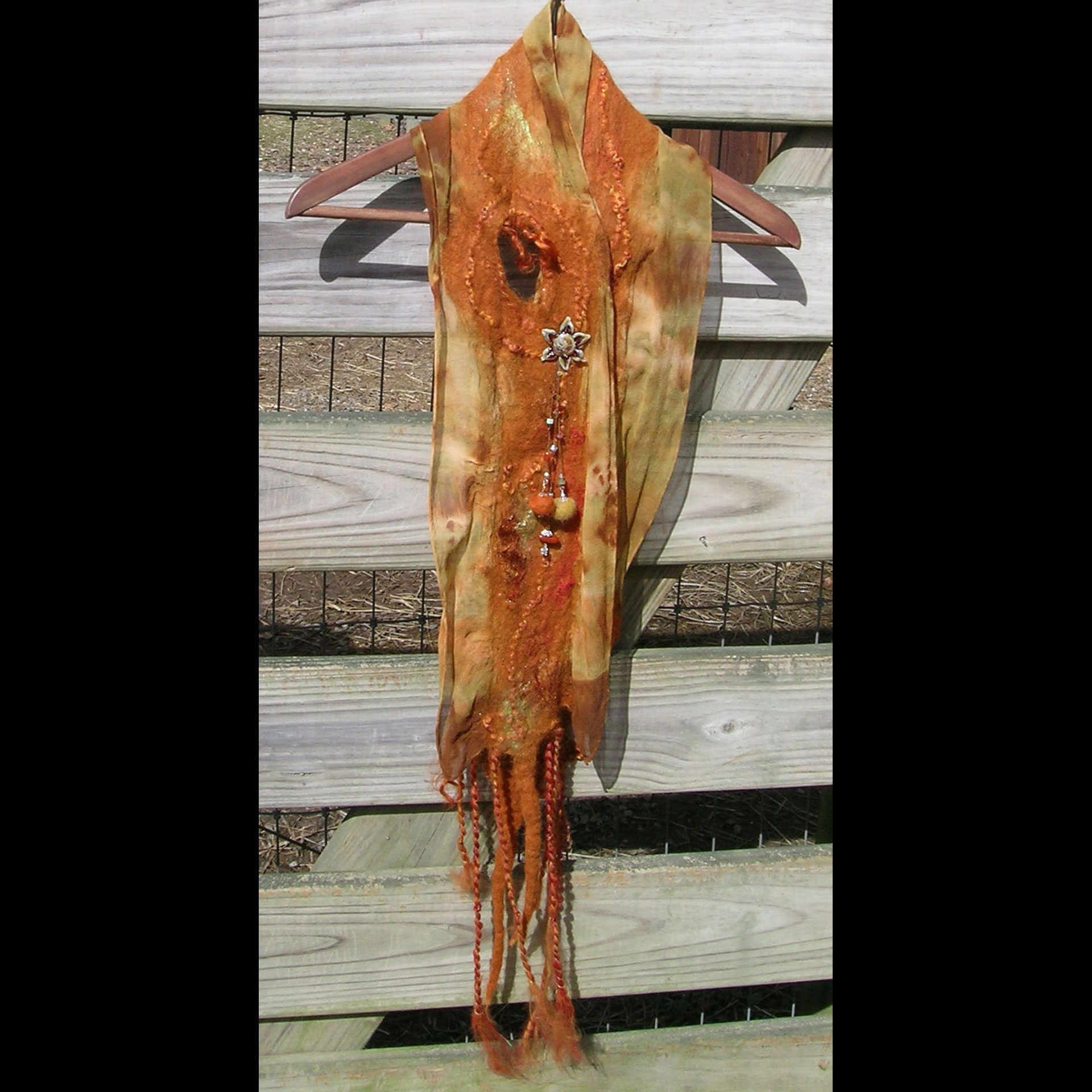
Nuno Felted Poncho and matching Wristlets Class

Needle Felted Mouse Class

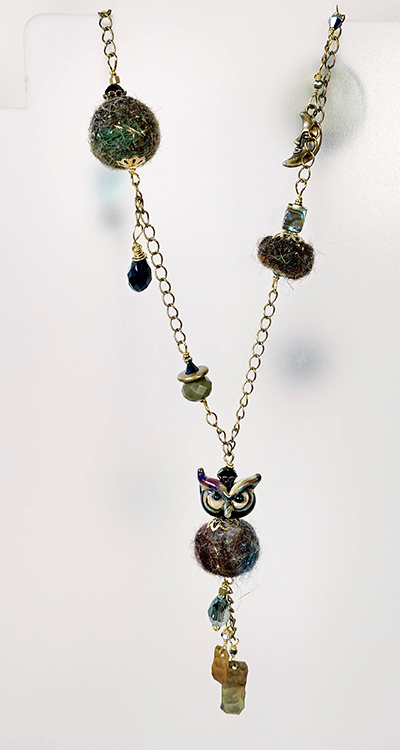
Owl Bead Felted Necklace and Earring Class
Needle Felted Long Eared Jerboa

Needle Felted Pumpkin Face Class
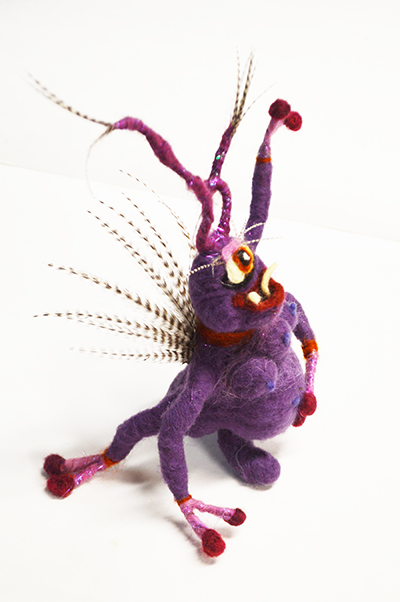
Needle Felted Space Monster Class
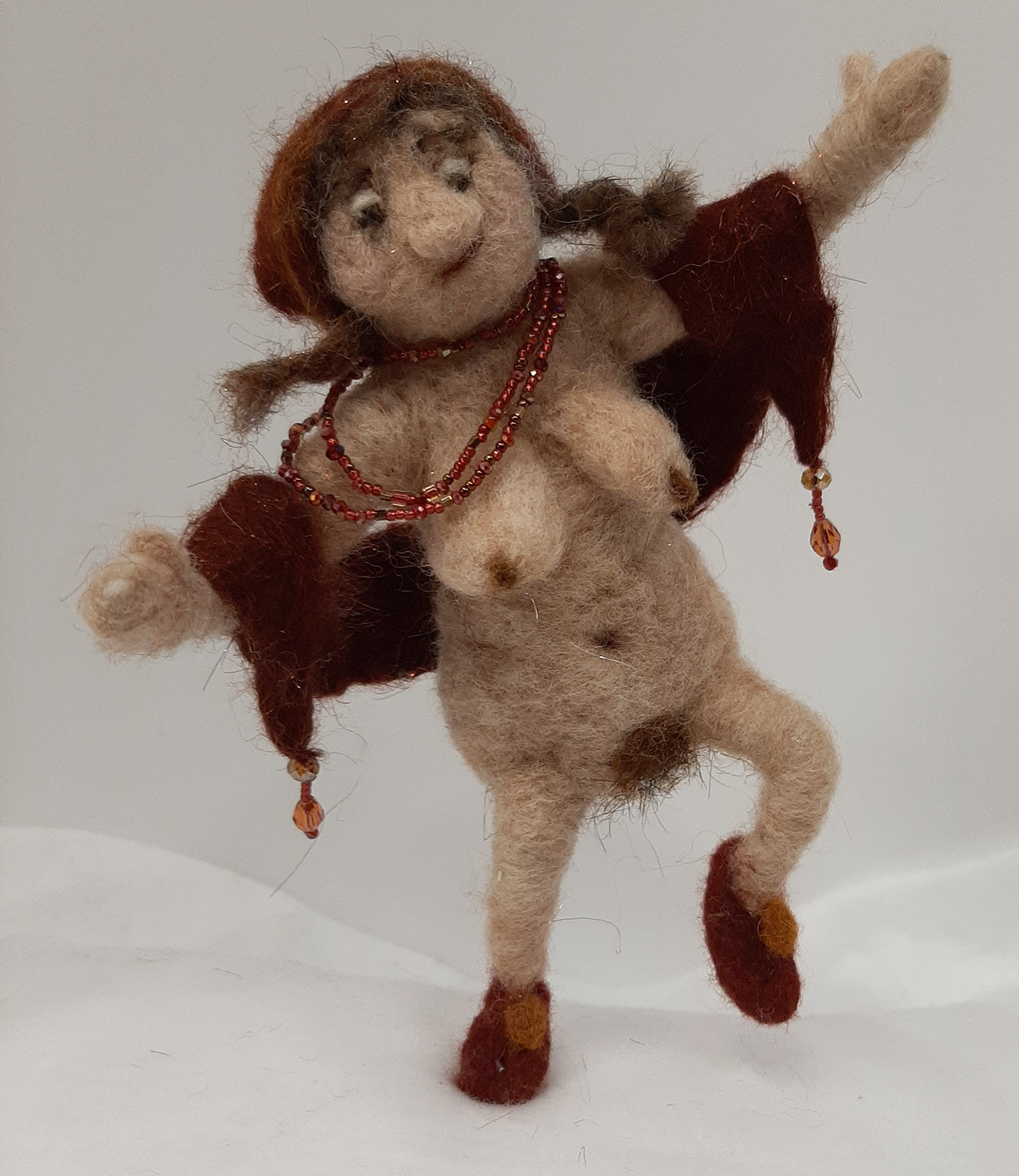
The Naked Truth, Needle Felted Figure Class

 Alpacas, Felting, Dyeing, Glass Beads, Gardening, Cooking, Herbals
Thank you for this inspiring and educational resource! Love it and love your farm!
LikeLike
Thankyou friend!
LikeLike